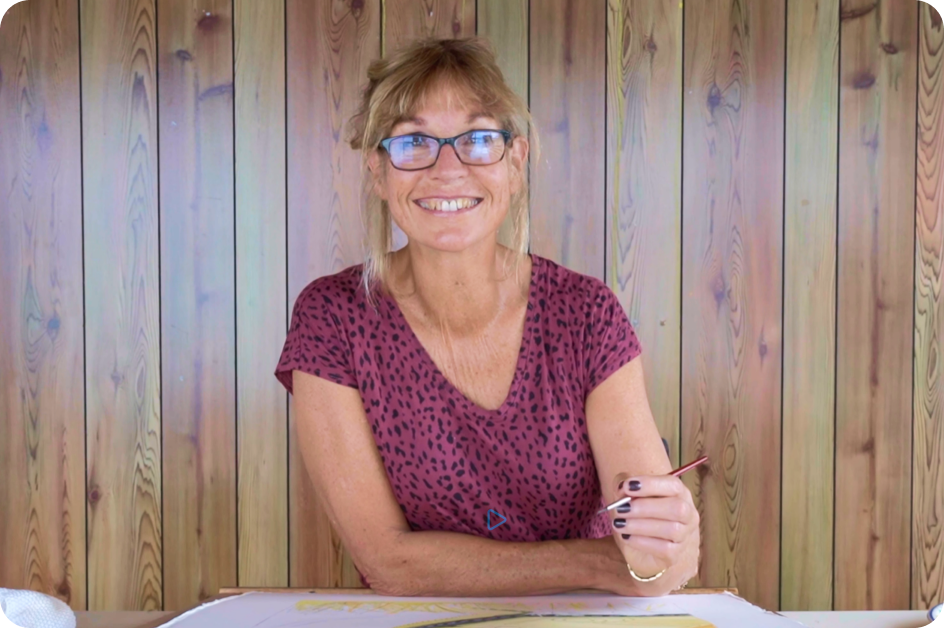
Lori Davis has been making art for over two decades. Her practice is rooted in drawing, collage, and constant reinvention, pulling images apart and putting them back together until something new emerges. Now based in Canterbury after 20 years in Nelson, she's returning to Te Ramaroa with a group of students to create large-scale glowing insects using luminous vinyl and fluorescent paint. We sat down with Lori to talk about her process, her connection to the region, and why real objects beat screens every time.
Tell us a bit about your background and how you work.
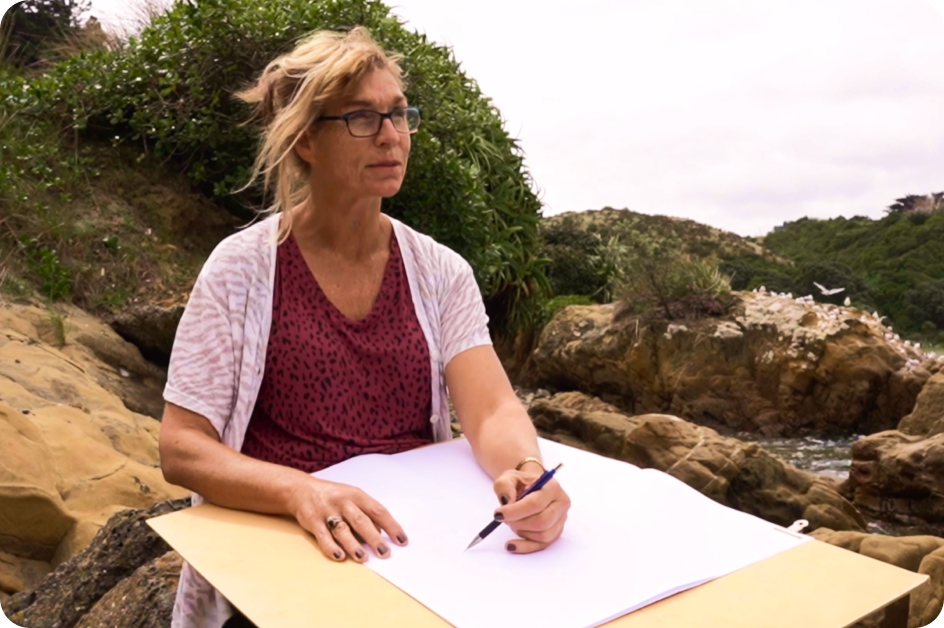
I've always been an artist. I've had a studio for about 20 to 25 years. I always start with drawing, sketching, noticing repeated patterns in landscapes or interiors. If I'm working on a beach scene, I'll go down and do lots of drawings, bring them back to the studio, cut them up, and recompose them into something that works.
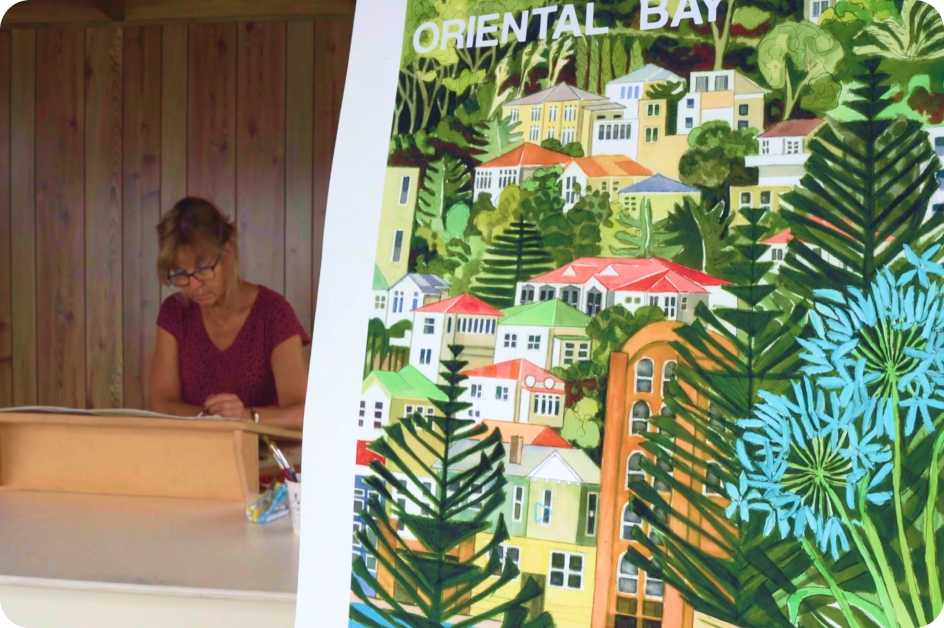
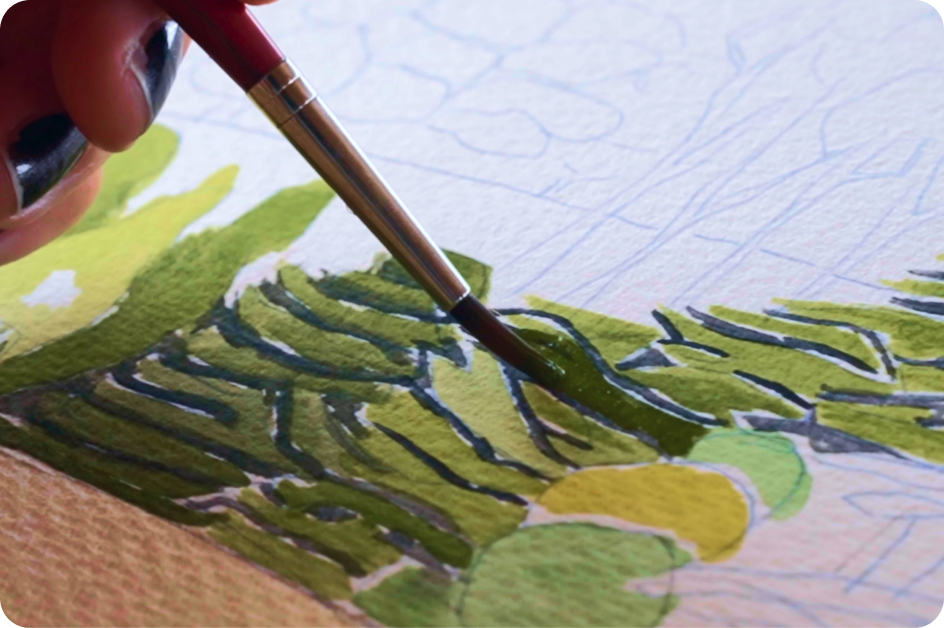
From there I'll paint onto heavy cotton rag paper using gouache, collage, pastel, lots of different media. I also like creating tall, recomposed prints using multiple images layered together digitally. I really enjoy pulling things apart and reusing them in new ways.
What draws you to that process of cutting and recomposing?
It lets me reinvent things. More colour, more rhythm, more pattern. When you look at something with your eyes, it's not flat like a photograph. It's layered. What you've seen before, what's around you, the time of day, memory. I try to capture that by reconstructing images.
I also work quite quickly and intuitively. I don't overthink it. I place things, paint over them, adjust, keep going. I have a big backlog of work. Sometimes I'll look at something I made 10 or 15 years ago and think, "Actually, I still like that," and reuse it in something new.
You spent a long time in Nelson. What was that like for your practice?
I lived in Nelson for about 20 years. It was incredibly inspiring, especially places like Golden Bay, Riwaka, and the hills where you can look down over the landscape and see all the layers of fields, sea, and hills. I love those layered environments, looking up or down. That's what really draws me in.
You've always worked with young people alongside your own practice. How does that connect to Te Ramaroa?
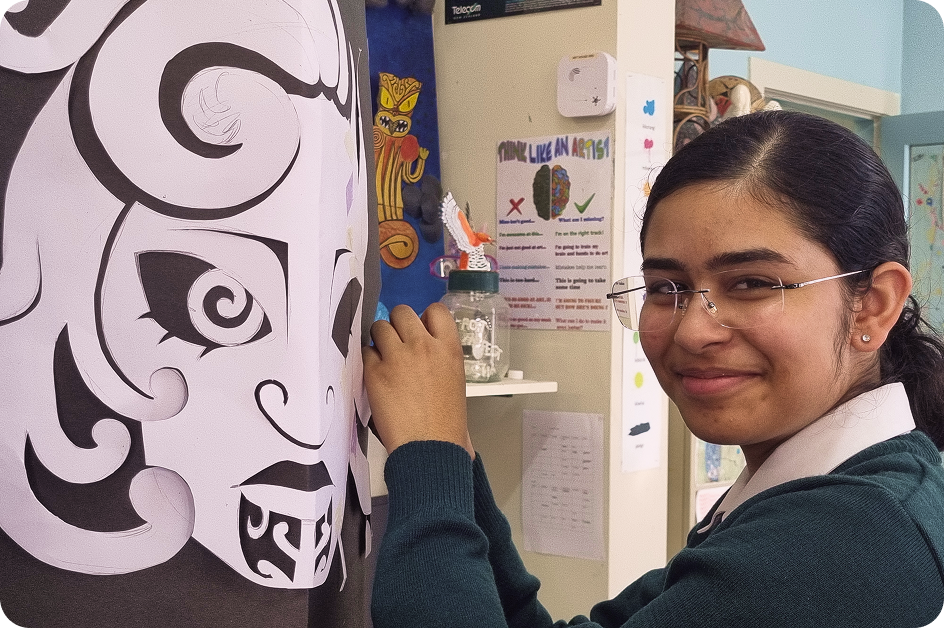
I've run after-school art classes and workshops for many years. Every project I've done with Te Ramaroa involves working with students. We use a similar collage-based process, cutting, rearranging, adapting, but translated into glow-in-the-dark work.
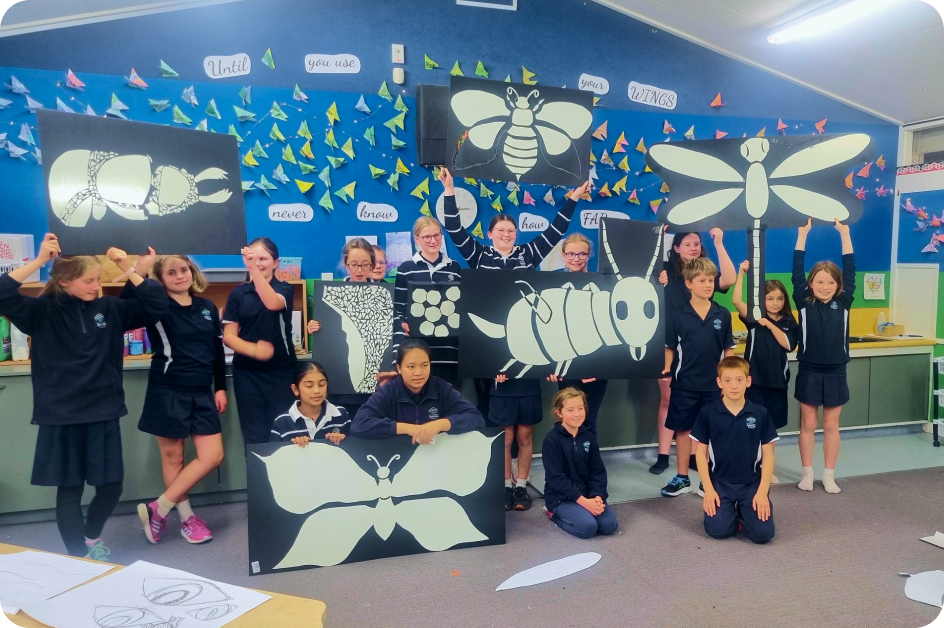
What are you and the students making for this year's festival?
This year's theme is endangered insects. We're designing insects with personality, almost like teenagers, giving them attitude and character. The Knobbled Weevil, the Stag Beetle, the Dragonfly, the Weta. What would they need if they were teenagers? Extra armour? Extra feelers?
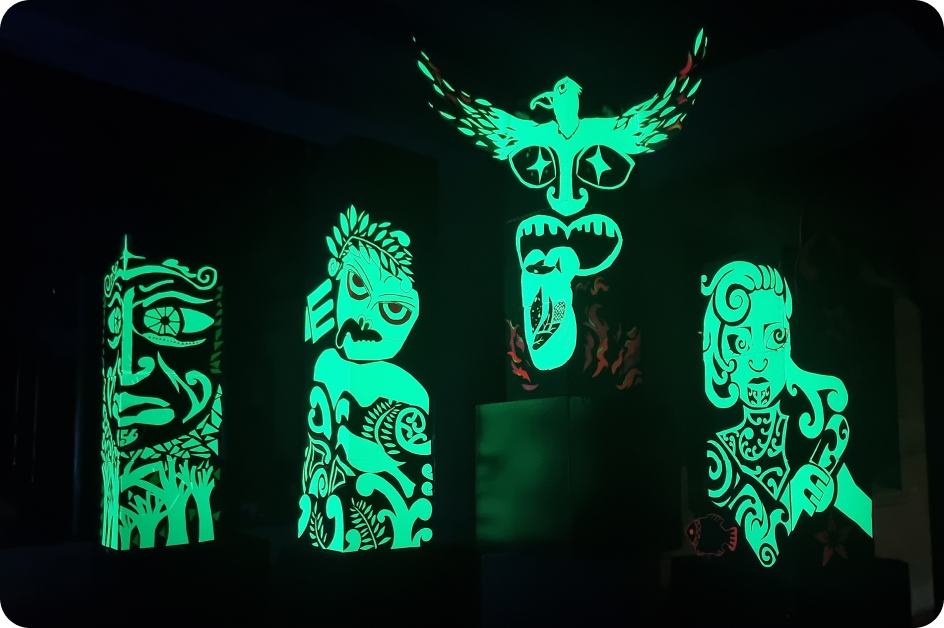
The works use luminous vinyl and fluorescent paint. The vinyl charges with light and glows on its own. The fluorescent paint reacts under UV. When the black light hits, especially in a strobe, the work appears to shift and move. Wings seem to lift or flicker. During the day, the pieces look quite ordinary. At night, they transform completely.
There's a real emphasis on working by hand in your workshops. Is that deliberate?
A big challenge is that many students are used to working from screens. They'll look up an image and draw it flat. So instead, I get them to draw from real objects using magnifying glasses. That helps them understand depth and form.
It's also about what happens socially. If they're drawing something together in the middle of the table, they're chatting, collaborating, engaging. If they're looking at a screen, they're not talking to each other. Working from real life changes the energy completely.
One of the challenges must be that students can't see the final effect while they're making the work?
They have to trust the process. It's difficult to demonstrate glow effects in a bright studio, so a lot of it is abstract for them until installation night.

What are you most looking forward to about seeing the work at Te Ramaroa?
You walk into this environment and suddenly everything glows and feels magical. That transformation, from ordinary to extraordinary, is a big part of the experience. It's just lovely.
Watch the full interview here:
Check out more of Lori's work here: https://www.loridavis.co.nz/
Lori Davis is exhibiting at Te Ramaroa 2026, 3 to 7 July, Nelson City.


